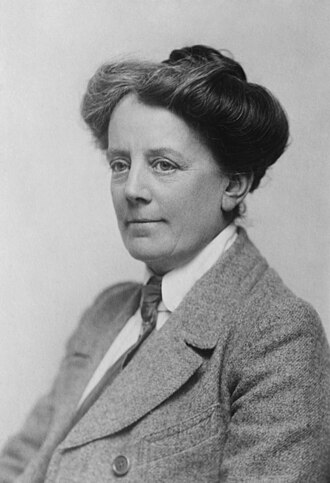
Ethel Smyth
Ethel Smyth (1858–1944) was an English composer, conductor, and suffragette, notable for her contributions to late Romantic and early twentieth-century music. She is recognized for her orchestral, choral, and operatic works, which combine dramatic intensity, lyrical expression, and technical innovation. Smyth’s career bridged the worlds of music and social activism, making her a pioneering figure for women in the field of classical composition.
Early Life and Education
Ethel Smyth was born on April 22, 1858, in Sidcup, Kent, England, into a family of military and landed gentry background. Initially trained in piano and organ, Smyth’s early musical education was supplemented by private instruction in composition. She pursued advanced studies at the Leipzig Conservatory and later in Berlin, where she studied under notable European instructors and immersed herself in the Germanic musical tradition. This rigorous training provided her with the technical foundation that underpinned her later compositional achievements.
Career
Smyth’s career encompassed composition, conducting, and active engagement in the women’s suffrage movement. She gained early recognition with her choral and chamber works, which demonstrated mastery of form, orchestration, and contrapuntal technique. Her operas, notably The Wreckers (1906), showcased her command of large-scale dramatic structures and her ability to fuse lyrical expression with vivid orchestral color.
As a suffragette, Smyth composed music for the movement, including songs and marches that became emblematic of the cause. She was known for her forthright personality, unorthodox career path for a woman of her time, and her advocacy for gender equality in music and society.
Smyth’s works were performed widely in Europe and Britain, earning her both critical acclaim and controversy. She was one of the first women composers to achieve international recognition in the male-dominated sphere of professional composition and conducting.
Major Works
Opera
Smyth’s operatic output is considered among her most significant contributions. Notable operas include:
The Wreckers (1906), set in Cornwall, celebrated for its dramatic intensity, orchestral color, and intricate vocal writing.
Der Wald (1902), premiered in Germany, displaying her skill in large-scale orchestral and choral writing.
Orchestral Music
Her orchestral works reveal a mastery of form, thematic development, and coloristic orchestration. Works such as Mass in D (1891) and symphonic overtures exhibit lyrical melodies, rhythmic vitality, and a rich harmonic palette.
Choral and Vocal Music
Smyth composed extensively for choir and solo voice, often integrating dramatic narrative and emotional expression. Her choral pieces include anthems, masses, and cantatas, characterized by contrapuntal sophistication and expressive depth.
Chamber and Instrumental Music
Her chamber works, including string quartets, piano trios, and solo instrumental pieces, demonstrate technical proficiency, formal clarity, and expressive lyricism. They often reflect her engagement with Germanic musical traditions while incorporating her distinctive harmonic and rhythmic sensibilities.
Musical Style
Ethel Smyth’s music is characterized by:
Dramatic expressivity: an emphasis on narrative and emotional intensity in both vocal and instrumental works.
Orchestral and choral innovation: inventive use of texture, timbre, and counterpoint.
Lyricism and harmonic richness: melding Romantic melodic lines with advanced harmonic structures.
Structural rigor: attention to form, thematic development, and motivic coherence.
Integration of personal and social themes: music that reflects her activism and advocacy for women’s rights.
Smyth’s style bridges late Romantic traditions with early twentieth-century innovations, creating works that are both expressive and formally disciplined.
Influence and Legacy
Ethel Smyth was a trailblazer for women composers, demonstrating that female musicians could achieve prominence in professional composition and conducting. Her involvement in the suffrage movement further cemented her status as a cultural and social pioneer.
Smyth’s works continue to be performed, studied, and celebrated for their dramatic power, technical sophistication, and historical significance. Her legacy endures as both a composer of substantial artistic achievement and a champion of gender equality in music.