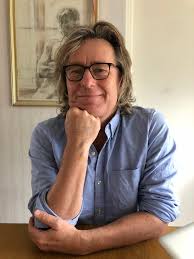
Anders Hillborg
Anders Hillborg (b. 1954) is a Swedish composer known for his diverse body of work spanning orchestral, chamber, vocal, and electroacoustic music. He is recognized for his distinctive blend of lyricism, rhythmic vitality, and innovative orchestration, establishing him as one of Sweden’s leading contemporary composers.
Early Life and Education
Anders Hillborg was born on June 10, 1954, in Stockholm, Sweden. He studied composition at the Royal College of Music in Stockholm under the tutelage of Ingvar Karkoff and attended masterclasses with prominent European composers. Early in his career, he engaged with electronic music and contemporary European techniques, which, combined with his interest in Scandinavian musical traditions, informed the development of a unique compositional voice marked by both experimentalism and melodic clarity.
Career
Hillborg’s career encompasses orchestral commissions, chamber music, vocal compositions, and electroacoustic projects. He has collaborated with leading orchestras and ensembles, including the Royal Stockholm Philharmonic, the BBC Symphony Orchestra, and the Los Angeles Philharmonic. His music has been featured in international festivals and broadcast worldwide, reflecting his prominence within the contemporary music scene.
In addition to composition, Hillborg has contributed to music education and served as a mentor to younger composers. He has also been active in projects that integrate traditional instrumentation with electronics, further expanding the expressive potential of contemporary music.
Major Works
Orchestral Music
Hillborg’s orchestral compositions are notable for their textural richness, rhythmic energy, and inventive orchestration. Key works include:
Eleven Gates (1997), a large-scale work demonstrating his interest in dynamic contrasts and orchestral color.
Dreaming River (2000), inspired by natural imagery, combining lyricism with complex rhythmic structures.
Sirens (2013), showcasing his mature orchestral language with shimmering textures and layered harmonies.
Chamber and Solo Music
Hillborg’s chamber works emphasize timbral variety, contrapuntal interaction, and structural clarity. Works such as Cold Heat (1984) for ensemble and Choral (1990) for strings illustrate his ability to balance experimental techniques with melodic expressivity. His solo instrumental works, including pieces for piano, violin, and percussion, explore extended techniques and nuanced articulation.
Vocal Music
Vocal compositions form a significant part of Hillborg’s output. His works for choir and solo voice, including King Lear (2000) and A Dream Play (1992), integrate poetic texts with rich harmonic language and complex rhythmic structures, highlighting his sensitivity to textual expression and vocal timbre.
Electroacoustic Music
Hillborg has explored electronic and electroacoustic music in several compositions, often blending acoustic instruments with electronic sounds to create spatially and timbrally intricate textures. These works demonstrate his interest in sonic exploration and contemporary sound design.
Musical Style
Anders Hillborg’s music is characterized by:
Orchestral and timbral innovation: imaginative use of instrumental color and layering.
Rhythmic complexity: asymmetrical meters, intricate patterns, and shifting pulses.
Lyricism and expressivity: melodic and harmonic elements that convey emotional depth.
Integration of tradition and modernity: synthesis of Scandinavian musical sensibilities with contemporary compositional techniques.
Exploration of sonic space: use of texture, resonance, and electronics to enhance musical architecture.
Hillborg’s style reflects a balance between experimentation and accessibility, producing music that is intellectually sophisticated while maintaining a strong communicative impact.
Influence and Legacy
Anders Hillborg is widely regarded as a leading figure in contemporary Swedish music, influencing both national and international audiences and composers. His work has expanded the expressive and technical possibilities of modern orchestral, chamber, and vocal music.
Hillborg continues to compose, collaborate, and perform internationally. His music is celebrated for its inventive orchestration, rhythmic vitality, and lyrical expressiveness, securing his status as a central figure in twenty-first-century contemporary music.