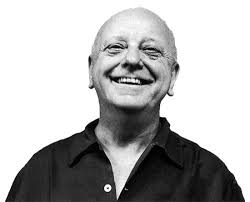
Virgil Thomson
Virgil Thomson (1896–1989) was an American composer, conductor, critic, and teacher, recognized for his influential contributions to twentieth-century American music. Renowned for his distinctive compositional style, which blended modernist techniques with vernacular and traditional American elements, Thomson played a pivotal role in shaping the sound of American classical music and music criticism. His work in opera, orchestral, choral, and film music, as well as his long tenure as a critic for The New York Herald Tribune, solidified his position as a central figure in the American musical landscape.
Early Life and Education
Virgil Thomson was born on November 25, 1896, in Chicago, Illinois, United States. He displayed early musical talent and pursued formal studies at the University of Chicago and Harvard University, focusing on piano, composition, and music theory. Thomson later studied in France at the Schola Cantorum under Charles Bordes and Vincent d’Indy, where he was exposed to French neoclassical and modernist traditions. This European education, combined with his American roots, shaped his unique musical voice, which combined rigorous formal training with accessibility and clarity.
Career
Compositional Work
Thomson’s compositions are marked by clarity, lyricism, and a distinctive American sensibility. He often employed modal harmonies, transparent textures, and simple melodic lines, while incorporating modernist elements such as polytonality and innovative orchestration. His work reflects a careful balance between avant-garde experimentation and communicative clarity.
Opera and Vocal Music
Thomson is particularly noted for his operas, many of which draw on American subjects and literary sources. His most famous opera, Four Saints in Three Acts (1934), with a libretto by Gertrude Stein, exemplifies his innovative approach to vocal writing, rhythmic flexibility, and harmonic clarity. Other notable works include The Mother of Us All (1947), a historical opera based on the life of suffragist Susan B. Anthony, which combines accessible melodies with sophisticated harmonic and contrapuntal textures.
Orchestral and Chamber Music
Thomson composed extensively for orchestra and chamber ensembles, producing works such as Symphony on a Hymn Tune (1928) and String Quartet (1948), which display his characteristic economy of means, contrapuntal clarity, and idiomatic instrumental writing. His music often integrates American folk and hymn tunes, reflecting his interest in national musical identity.
Film Music
Thomson was also a pioneering composer of film scores. He collaborated with documentary filmmaker Pare Lorentz on works such as The Plow That Broke the Plains (1936) and The River (1937), blending orchestral lyricism with a clear narrative and programmatic style. These compositions helped establish his reputation for sensitivity to American landscapes and social themes.
Music Criticism and Pedagogy
From 1940 to 1954, Thomson served as chief music critic for The New York Herald Tribune, where he championed contemporary American composers, including Aaron Copland, Elliott Carter, and Leonard Bernstein. His criticism combined historical knowledge, technical insight, and an accessible writing style, influencing public perception of American music. He also taught at institutions including the University of Buffalo and New York University, mentoring younger composers and promoting modernist techniques within an American context.
Musical Style and Aesthetic
Thomson’s musical style is characterized by:
Clarity of texture and melody, emphasizing transparent orchestration and singable lines.
Integration of American folk and hymnody, reflecting national identity in a modernist framework.
Use of neoclassical forms and harmonic structures, often combined with subtle modernist experimentation.
Economy of means, achieving expressive effect with restraint and precision.
Sensitivity to text and dramatic context, particularly in operatic and vocal works.
Thomson’s aesthetic bridges modernism and accessibility, balancing technical innovation with communicative clarity.
Influence and Legacy
Virgil Thomson played a seminal role in shaping twentieth-century American music. His compositions, characterized by a synthesis of modernist techniques and American vernacular idioms, influenced generations of composers seeking a distinctly national style. As a critic, he advocated for contemporary American music, shaping public discourse and fostering an environment supportive of innovation.
Thomson’s operas, orchestral works, and film scores continue to be performed and studied for their stylistic originality, structural clarity, and cultural significance. His dual legacy as both composer and critic positions him as a central figure in the development of a distinctly American musical modernism.