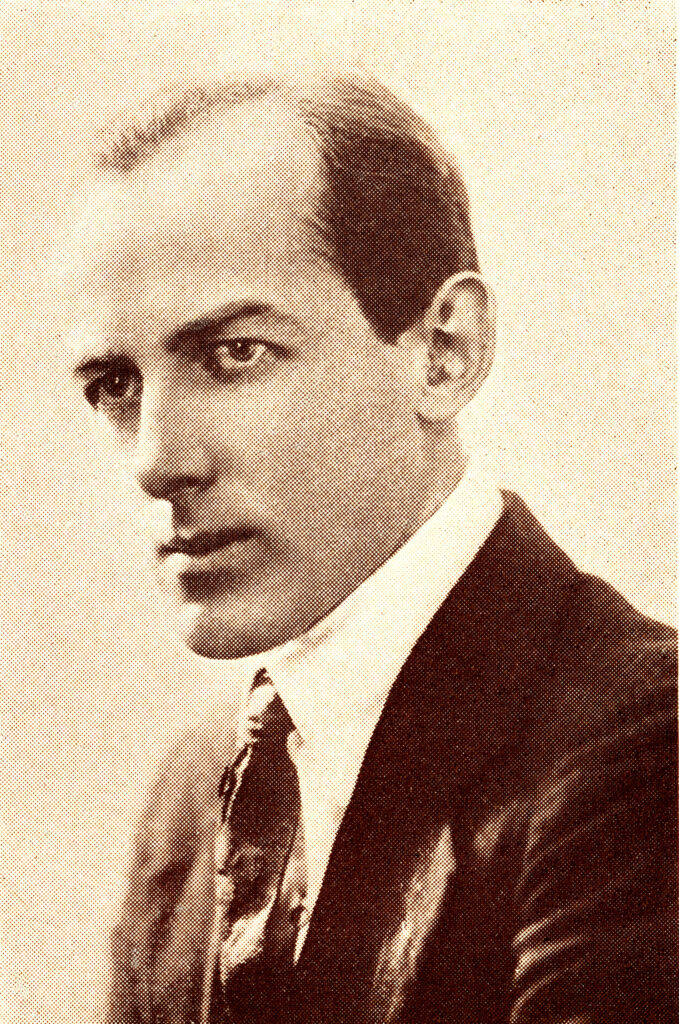
Henry Cowell
Henry Cowell (1897–1965) was an American composer, pianist, theorist, and music educator, widely regarded as a pioneering figure in twentieth-century experimental music. His innovations in rhythm, harmony, and piano technique, as well as his integration of non-Western musical elements, significantly expanded the expressive and technical possibilities of contemporary composition. Cowell’s work influenced generations of composers and performers, particularly in the United States, and laid the groundwork for avant-garde and minimalist movements.
Early Life and Education
Henry Dixon Cowell was born on March 11, 1897, in Menlo Park, California, United States. Largely self-taught in music during his early years, he developed an interest in both Western and non-Western musical traditions, including Indonesian gamelan and folk music. Cowell’s early exposure to a variety of musical cultures informed his experimental compositional approach and his lifelong engagement with rhythm, harmony, and texture.
Career
Innovations in Piano Technique
Cowell is perhaps best known for his radical innovations in piano technique, including:
Tone clusters, which involve playing dense chords using the fist, forearm, or other unconventional methods to create percussive, dissonant textures.
Extended techniques, including playing directly on the strings of the piano, plucking, or striking them to produce unique timbres.
These innovations are exemplified in works such as The Tides of Manaunaun (1917) and Dynamic Motion (1916), which challenged traditional notions of pianistic technique and expanded the expressive range of the instrument.
Rhythmic and Harmonic Exploration
Cowell was a pioneer in the exploration of complex rhythmic structures, including polymeters, additive rhythms, and free rhythmic notation. He also experimented with microtonality and alternative tuning systems, drawing inspiration from non-Western music. His compositions often integrate elements from folk traditions, Asian music, and other cultural sources, creating a synthesis of global musical ideas.
Experimental and Electroacoustic Work
In addition to piano music, Cowell composed orchestral, choral, and chamber works, many of which explore extended harmonic and rhythmic language. He was also an early advocate for experimental and electronic music, supporting young composers and fostering the development of new compositional techniques through his teaching and writings.
Educational and Editorial Contributions
Cowell was deeply committed to music education and advocacy. He founded the journal New Music in 1927, providing a platform for avant-garde composers, and taught at institutions including the New School for Social Research and Columbia University. His pedagogical efforts helped shape American contemporary music and promoted experimental approaches to composition and performance.
Major Works
The Tides of Manaunaun (1917): A piano tone-cluster composition inspired by mythological imagery.
Dynamic Motion (1916): Early piano work employing tone clusters and unconventional techniques.
String Quartet No. 3 (1927): Incorporates experimental harmonic and rhythmic structures.
Polyphonic Fantasy (1923): Combines complex counterpoint with rhythmic innovation.
Musical Style and Aesthetic
Cowell’s style is characterized by:
Experimental piano techniques, particularly tone clusters and string manipulation.
Rhythmic complexity, including polyrhythms, additive meters, and free rhythmic structures.
Exploration of timbre and texture, often through unconventional instrumental techniques.
Integration of non-Western musical elements, drawing from Asian and folk traditions.
Commitment to experimentation and innovation, challenging conventional compositional practices.
His aesthetic emphasizes the expansion of musical language and the exploration of sound as a multidimensional and culturally inclusive phenomenon.
Influence and Legacy
Henry Cowell is recognized as a foundational figure in American experimental music. His innovations in rhythm, harmony, and piano technique influenced composers including John Cage, Lou Harrison, and Elliott Carter, among others. Cowell’s advocacy for new music, his theoretical writings, and his pedagogical work helped establish a climate of experimentation that shaped American musical modernism in the twentieth century.
His legacy continues to inform contemporary composition, performance, and music education, highlighting the intersection of technical innovation, cultural synthesis, and avant-garde exploration in modern music.