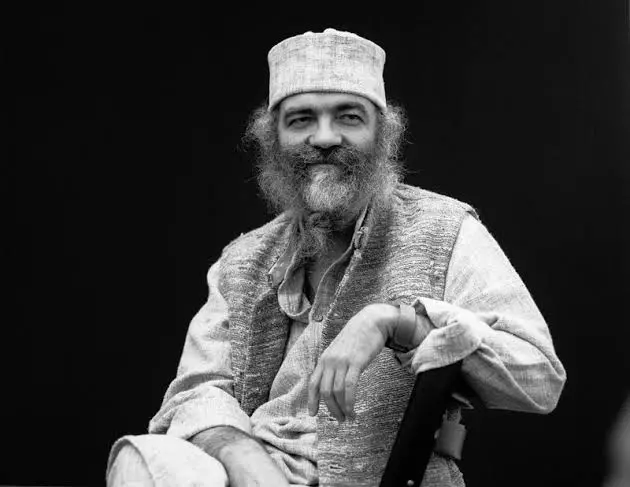
La Monte Young
La Monte Young (b. 1935) is an American composer, musician, and central figure in the development of minimalist and drone-based music. Widely regarded as one of the pioneers of American avant-garde composition, Young’s work has profoundly influenced contemporary classical music, experimental sound art, and electronic and ambient music. His compositions are characterized by sustained tones, microtonal tuning systems, long durations, and a focus on the perceptual and spatial properties of sound.
Early Life and Education
La Monte Thornton Young was born on October 14, 1935, in Bern, Idaho, United States. He studied at the University of California, Berkeley, and later at the University of Michigan, where he pursued formal composition studies. Early exposure to jazz, Indian classical music, and European modernism shaped his interest in non-traditional tonal systems, improvisation, and sustained sound. Young’s encounters with Indian raga traditions, particularly under the tutelage of Pandit Pran Nath, were formative in his development of drone-based and microtonal compositions.
Career
Minimalism and the New York School
In the 1960s, Young emerged as a foundational figure in the New York avant-garde music scene, collaborating with artists and composers associated with the New York School, including John Cage, Terry Riley, and Marian Zazeela. He played a central role in the development of American minimalism, a movement characterized by repetitive structures, extended duration, and tonal stasis, positioning sound itself as the primary compositional element.
Compositional Innovations
Young’s compositions often involve extended durations, sustained tones, and complex tuning systems, emphasizing the listener’s perception of subtle harmonic and temporal changes. Key aspects of his work include:
Drone-based structures, employing sustained pitches that create psychoacoustic interactions and shifting overtones.
Just intonation and microtonal systems, exploring harmonic ratios beyond conventional equal temperament.
Extended duration, with some works performed continuously for hours, days, or indefinitely, challenging conventional notions of musical time.
Integration of visual and spatial elements, often in collaboration with Marian Zazeela, creating immersive environments where sound and light interact.
Major Works
Trio for Strings (1958–1960), an early work notable for its exploration of sustained tones and novel harmonic interactions.
The Well-Tuned Piano (1964–present), a long-duration solo piano work in just intonation that exemplifies Young’s focus on continuous sound, modal development, and acoustic resonance.
Drift Studies (1960s), a series of pieces exploring continuous drones, sonic envelopes, and the perception of pitch relationships over extended time.
Collaborative installations with Marian Zazeela, particularly at the Dream House, an immersive environment in New York City that integrates sound and light as continuous art forms.
Dream House and Collaborative Work
Young and Zazeela co-founded the Dream House, a space for immersive installation where sustained sound and visual light patterns create a continuous sensory environment. These installations extend Young’s compositional philosophy into spatial and experiential dimensions, emphasizing prolonged engagement and perceptual subtlety.
Musical Style and Aesthetic
La Monte Young’s style is characterized by:
Sustained tones and drones, emphasizing timbre, resonance, and harmonic interaction.
Microtonality and just intonation, exploring precise harmonic relationships and spectral phenomena.
Minimalist and process-oriented structures, favoring stasis, repetition, and gradual evolution over conventional development.
Emphasis on perception and environment, encouraging attentive listening and spatial awareness.
Interdisciplinary engagement, integrating visual art, performance, and architectural space to shape the listener’s sensory experience.
Young’s aesthetic positions music as a temporal, spatial, and perceptual medium, inviting prolonged contemplation and heightened awareness of sound.
Influence and Legacy
La Monte Young is widely recognized as a foundational figure in minimalist music and experimental sound art. His innovations in sustained tone, microtonal tuning, and long-duration composition have influenced numerous composers and musicians, including Terry Riley, Philip Glass, Steve Reich, and Éliane Radigue.
Young’s work has had lasting impact across experimental, electronic, and ambient music, as well as in contemporary art and installation practices. His compositions and immersive environments challenge conventional conceptions of musical form, duration, and audience engagement, establishing him as a central figure in the evolution of twentieth- and twenty-first-century experimental music.