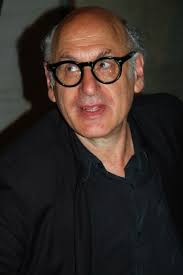
Michael Nyman
Michael Nyman (b. 1944) is a British composer, pianist, musicologist, and filmmaker renowned for his pioneering contributions to minimalist and post-minimalist music, as well as for his influential work in film scoring and contemporary classical composition. Nyman’s distinctive musical voice combines repetitive structures, energetic rhythmic propulsion, and inventive harmonic layering, often integrating historical references with modernist and popular idioms. His oeuvre spans concert music, operas, chamber works, and a substantial body of film scores, establishing him as a central figure in late twentieth- and early twenty-first-century music.
Early Life and Education
Michael Laurence Nyman was born on March 23, 1944, in London, England. He studied at the Royal Academy of Music and later at the University of Cambridge, where he focused on composition and musicology. Early in his career, Nyman was deeply influenced by European modernist composers, historical music practices, and the emerging minimalist movement, including the works of Steve Reich and Philip Glass. His research in early music and baroque repertoire informed his later approach to reworking historical materials within contemporary frameworks.
Career
Nyman emerged as a prominent composer in the 1960s and 1970s, initially gaining attention through his musicological work and his performances as a pianist. He became a leading proponent of minimalism in the United Kingdom, creating music characterized by rhythmic drive, structural repetition, and accessible yet intellectually rigorous harmonic language.
In 1976, Nyman founded the Michael Nyman Band, an ensemble designed to perform his compositions that blend traditional classical instruments with amplified strings, winds, and piano. The ensemble’s work expanded the possibilities of chamber orchestration and became a key vehicle for his stylistic experimentation.
Nyman’s international recognition grew through his collaborations with filmmakers, most notably Peter Greenaway. Their partnership produced numerous critically acclaimed film scores, in which Nyman’s minimalist techniques were adapted to cinematic narrative and dramaturgy. This work introduced his music to a broader audience and cemented his reputation as a composer capable of bridging concert and media contexts.
Major Works
Film Scores
Nyman is widely known for his film music, which often employs repetitive motifs, driving ostinatos, and clear formal structures to enhance visual storytelling:
The Draughtsman’s Contract (1982), his first collaboration with Peter Greenaway, features baroque-inspired patterns and rhythmic precision that articulate the film’s formal aesthetic.
The Cook, the Thief, His Wife & Her Lover (1989), notable for its darkly lyrical themes and dramatic contrast.
The Piano (1993), directed by Jane Campion, brought Nyman international acclaim. Its score combines minimalist textures, lyrical piano writing, and folk-inspired melodies, earning widespread recognition and contributing significantly to the film’s emotional impact.
Prospero’s Books (1991) and Drowning by Numbers (1988) further illustrate his integration of structural repetition with narrative tension and psychological nuance.
Concert Music and Opera
In addition to film, Nyman has composed extensively for the concert stage:
The Man Who Mistook His Wife for a Hat (1986), an opera based on Oliver Sacks’ neurological case studies, demonstrating his interest in narrative-driven vocal music.
String Quartets and Chamber Works, such as String Quartet No. 1 (1985), reflect his engagement with classical forms through minimalist repetition and modal harmonies.
The Michael Nyman Songbook (1995), which collects vocal compositions that blend lyrical content with rhythmic and harmonic rigor.
Musical Style
Michael Nyman’s style is defined by:
Minimalist and post-minimalist techniques, including repetitive motifs, gradual harmonic shifts, and ostinato patterns.
Rhythmic vitality, often featuring motoric energy and interlocking textures.
Integration of historical and popular idioms, drawing on baroque, folk, and popular music influences.
Textural clarity and transparency, emphasizing the interplay of melodic lines and harmonic scaffolding.
Narrative sensitivity, particularly in his film and operatic works, where musical structures enhance dramatic progression.
Nyman’s music is often noted for its accessibility, combining intellectual sophistication with immediate emotional resonance.
Influence and Legacy
Michael Nyman is widely recognized as a central figure in the development of British minimalism and post-minimalist music. His work has influenced contemporary composers, film musicians, and interdisciplinary artists seeking to merge structural rigor with expressive clarity.
Through his innovative approach to orchestration, integration of historical materials, and pioneering use of repetitive structures, Nyman has significantly shaped the aesthetic landscape of contemporary music, bridging the realms of concert composition, opera, and film scoring. His contributions continue to inform both academic study and public appreciation of late twentieth- and early twenty-first-century music.