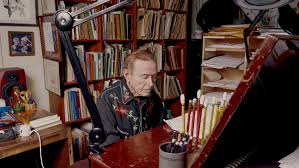
David Del Tredici
David Del Tredici (b. 1937) is an American composer associated with the Neo-Romantic movement in late twentieth-century classical music, noted for his richly expressive, tonal, and programmatic compositions. His work is characterized by lyrical intensity, narrative depth, and a unique synthesis of avant-garde techniques with romantic sensibilities, establishing him as a distinctive figure in contemporary American music.
Early Life and Education
David Del Tredici was born on March 16, 1937, in Pittsburgh, Pennsylvania. He displayed early musical talent, studying piano and composition, and later pursued formal education at Carnegie Institute of Technology (now Carnegie Mellon University) and Princeton University. His teachers included Edward T. Cone and Milton Babbitt, exposing him to both rigorous theoretical training and modernist compositional techniques. Initially engaging with serialism and other avant-garde methods, Del Tredici gradually moved toward tonal and programmatic approaches, influenced by Romantic literature and the music of Schumann, Mahler, and other nineteenth-century composers.
Career
Del Tredici’s career spans concert music, piano works, and vocal compositions, often drawing inspiration from literary sources. He achieved recognition in the 1970s for works that embraced tonality and expressive narrative at a time when serialism and other modernist approaches dominated the American musical landscape. His compositions frequently explore themes of transformation, memory, and psychological depth.
He has taught at multiple institutions, including the City University of New York, and has served as a mentor to younger composers, promoting an expressive, narrative-driven approach to composition. Del Tredici has received numerous commissions from major orchestras and ensembles in the United States and abroad, and his works are performed internationally.
Major Works
Orchestral Music
Del Tredici’s orchestral output is known for its lyricism, dramatic narrative, and tonal richness. Notable works include:
In Memory of a Summer Day (1969), a tone poem inspired by Alice in Wonderland, combining lush orchestration with programmatic storytelling.
Final Alice (1980–83), a large-scale orchestral and vocal work that exemplifies his Neo-Romantic style and literary inspiration.
The Spider and the Fly (1996), an orchestral piece integrating tonal lyricism with vivid rhythmic and timbral contrasts.
Vocal and Piano Music
Del Tredici has composed extensively for voice and piano, often incorporating literary texts and programmatic elements. Works such as The Child Alice and Beatrice and Virgil set poetic and narrative texts to music, balancing clarity of diction with rich harmonic language. His piano compositions, including Alice Variations (1969), demonstrate virtuosic technique, thematic development, and expressive range.
Chamber Music
His chamber music maintains the same lyrical and programmatic qualities found in his orchestral works, employing both tonal and experimental techniques to create dynamic and expressive textures. Works include piano trios, string quartets, and instrumental solos that emphasize melodic expressivity and dramatic contrast.
Musical Style
Del Tredici’s music is characterized by:
Neo-Romantic tonality: an embrace of tonal and modal frameworks, often in contrast with prevailing modernist trends.
Programmatic and narrative focus: works frequently inspired by literature, fairy tales, and personal narrative.
Expressive lyricism: emphasis on melody, harmonic richness, and emotional immediacy.
Structural clarity: balanced forms that combine Romantic sensibilities with modern techniques.
Integration of avant-garde elements: occasional use of dissonance, serial techniques, or extended instrumental methods within a broadly tonal context.
Del Tredici’s music reflects a synthesis of nineteenth-century expressivity and contemporary compositional thinking, resulting in works that are both intellectually rigorous and emotionally compelling.
Influence and Legacy
David Del Tredici is recognized as a leading figure in the American Neo-Romantic movement, whose work challenged the dominance of serialism and modernist orthodoxy in the late twentieth century. His contributions have influenced composers seeking a renewed expressive and narrative approach to contemporary classical music.
Del Tredici continues to compose and perform, and his music is celebrated for its lyrical intensity, structural sophistication, and literary inspiration, ensuring his enduring impact on American musical culture.