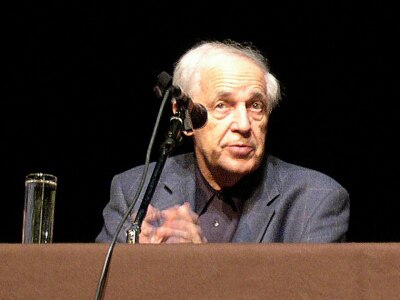
Pierre Boulez
Pierre Boulez (1925–2016) was a French composer, conductor, and music theorist, widely regarded as one of the most influential figures in twentieth-century music. Known for his pioneering work in serialism, electronic music, and avant-garde composition, Boulez combined intellectual rigor with innovative approaches to orchestration, form, and performance. His contributions as a conductor and educator significantly shaped the development of contemporary music in Europe and internationally.
Early Life and Education
Pierre Boulez was born on March 26, 1925, in Montbrison, Loire, France. He displayed early musical aptitude, studying piano and theory before enrolling at the Paris Conservatoire. There, he studied under Olivier Messiaen, whose teachings in rhythm, harmony, and modes left a lasting imprint on Boulez’s compositional approach. He also studied privately with René Leibowitz, a proponent of twelve-tone serialism, which influenced Boulez’s early adoption and extension of serialist techniques.
Career
Boulez’s compositional career emerged in the late 1940s and early 1950s with works that exemplified rigorous structural innovation and complex serial organization. Early compositions, including Le Soleil des eaux (1948–49) and Structures (1952–54), established his reputation as a leading figure in postwar modernism. He became associated with the avant-garde circle surrounding Darmstadt Summer Courses, contributing to the dissemination and development of serialist and experimental music.
In addition to composition, Boulez was a prominent conductor, known for championing contemporary repertoire and works of the classical canon. He held leadership positions with institutions including the BBC Symphony Orchestra, New York Philharmonic, and Ensemble InterContemporain, an ensemble he founded in 1976 dedicated to the performance and promotion of contemporary music.
Boulez also engaged extensively in music theory and pedagogy, writing influential essays on composition and analysis, and mentoring emerging composers through academic and festival institutions.
Major Works
Orchestral Music
Boulez’s orchestral output is characterized by complex serial structures, intricate textures, and innovative timbral combinations. Notable works include:
Le Marteau sans maître (1953–55), a landmark work for alto voice and six instrumentalists, combining serial techniques with extended instrumental color and rhythmic sophistication.
Figures—Doubles—Prismes (1957–58), which explores spatialization, orchestral layering, and formal abstraction.
Répons (1981–84), a large-scale work integrating live electronics, spatialized sound, and orchestral ensemble.
Chamber Music
Boulez’s chamber works, including Dérive 1 (1984) and …explosante-fixe… (1971–73, revised 1986), are noted for their precision, transparency, and exploitation of instrumental color. They often serve as laboratories for structural experimentation and detailed articulation of serial principles.
Vocal and Stage Music
Boulez composed several works combining voice and instrumental ensembles, most prominently Le Soleil des eaux and Pli selon pli (1957–62), which set texts by the French poet René Char. His vocal music emphasizes textual clarity, extended vocal techniques, and integration with complex instrumental textures.
Electronic and Experimental Music
Boulez was a pioneer in electronic music, collaborating with the Studio d’Essai and IRCAM in Paris. Works such as Dialogue de l’ombre double (1985) for clarinet and tape demonstrate his innovative use of electronics to extend instrumental and spatial possibilities.
Musical Style
Boulez’s style is characterized by:
Serialism and structural rigor: use of twelve-tone and total serial techniques, extending serial principles to rhythm, dynamics, and timbre.
Textural and timbral innovation: complex orchestration with attention to color, spacing, and instrumental interplay.
Rhythmic complexity: frequent use of asymmetrical rhythms, polyrhythms, and metric modulation.
Integration of electronics: exploration of live and pre-recorded electronic sound to expand compositional and performative possibilities.
Avant-garde formal experimentation: flexible, non-traditional structures, emphasizing processes and transformations over conventional melodic development.
Boulez’s music is recognized for its intellectual depth, meticulous craftsmanship, and forward-looking aesthetic, bridging serialist modernism with experimental and electronic music.
Influence and Legacy
Pierre Boulez is widely regarded as a central figure in postwar European music, whose influence extended across composition, conducting, and pedagogy. His advocacy for contemporary music reshaped orchestral and festival programming, and his writings and theoretical work informed generations of composers and performers.
Boulez passed away on January 5, 2016, in Baden-Baden, Germany. His legacy endures through his extensive catalog of compositions, pioneering electronic works, and transformative contributions to the performance and dissemination of contemporary music worldwide.