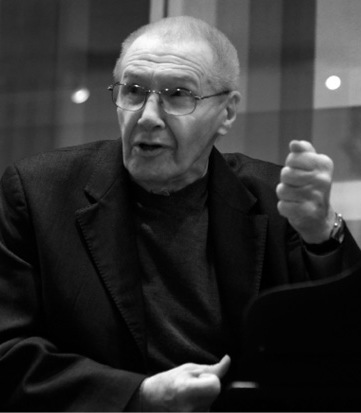
György Kurtág
György Kurtág (b. 1926) is a Hungarian composer and pianist recognized for his highly concentrated, expressive, and intellectually rigorous contributions to contemporary classical music. Renowned for his chamber, vocal, and piano works, Kurtág’s music is marked by brevity, structural precision, and a profound emotional intensity. His distinctive style, which blends modernist techniques with personal lyricism, has made him one of the most influential European composers of the late twentieth and early twenty-first centuries.
Early Life and Education
György Kurtág was born on February 19, 1926, in Lugoj, then part of the Kingdom of Romania. Showing early musical aptitude, he pursued piano studies and later enrolled at the Franz Liszt Academy of Music in Budapest, where he studied composition under Sándor Veress and piano with Pál Kadosa. Kurtág also received guidance from Hungarian modernist composer Zoltán Kodály, whose emphasis on folk music, structural clarity, and expressive restraint influenced his compositional development. During his formative years, Kurtág absorbed both European avant-garde trends and the traditions of Central European music.
Career
Kurtág’s career encompasses composition, pedagogy, and performance. He taught at the Franz Liszt Academy for several decades, mentoring multiple generations of Hungarian composers. His compositions, initially influenced by post-serialist techniques and Central European modernism, evolved into a highly personal style characterized by conciseness, psychological depth, and meticulous attention to timbre and gesture.
Kurtág’s music gained international recognition from the 1970s onward, with performances at leading contemporary music festivals and by prominent ensembles. His reputation rests largely on his chamber music and vocal works, though his contributions to piano literature and orchestral music are also significant.
Major Works
Chamber Music
Kurtág’s chamber music is central to his output, known for extreme concentration and expressive density. Notable works include:
Játékok (1963– ), a series of piano miniatures exploring unconventional timbres, extended techniques, and performative playfulness.
Stele (1994), an orchestral work for large ensemble characterized by gestural intensity and contrapuntal precision.
String Quartet No. 1 (1959) and String Quartet No. 2 (1979), exemplifying his concise, aphoristic style and intricate textural detail.
Vocal Music
Kurtág has extensively set poetry and literary texts, particularly in Kafka-Fragmente (1985–86), a cycle of aphoristic pieces for soprano and ensemble, drawing on the writings of Franz Kafka. Other notable vocal works include Signs, Games and Messages (1992), which explore fragmented text and musical gestures, emphasizing communication through minimal material.
Piano Music
Kurtág’s contributions to piano literature are particularly celebrated for their psychological intensity and economy of means. The Játékok series emphasizes exploration, improvisatory character, and an inventive approach to touch, timbre, and notation, challenging traditional piano techniques while encouraging performative spontaneity.
Orchestral Music
Though primarily known for chamber and piano music, Kurtág has composed orchestral works that reflect his concentrated style and attention to color, such as Stele and Messages of the Late Miss R.V. Troussova (1980s), which combine serialist techniques with gestural expressivity.
Musical Style
György Kurtág’s music is distinguished by:
Brevity and concentration: compositions often consist of miniature movements or aphoristic gestures, maximizing expressive impact in minimal duration.
Expressive intensity: deep psychological and emotional content conveyed through concise musical language.
Structural precision: meticulous attention to counterpoint, harmonic relationships, and rhythmic clarity.
Innovative use of timbre: exploration of instrumental color, unconventional sounds, and extended techniques.
Integration of modernist and personal idioms: blending serialism, post-serialist techniques, and Central European traditions with individual lyricism and emotional immediacy.
Kurtág’s works frequently challenge traditional expectations of form and duration, creating music that is both intellectually rigorous and deeply expressive.
Influence and Legacy
György Kurtág is widely regarded as one of the foremost European composers of the postwar era. His concentrated and aphoristic style has influenced composers internationally and reshaped approaches to chamber and piano music. His pedagogical work at the Franz Liszt Academy contributed significantly to the development of Hungarian and Central European contemporary music.
Kurtág continues to compose and perform, and his works are regularly performed at major festivals and concert halls worldwide. His music remains celebrated for its profound emotional depth, intellectual precision, and enduring originality.