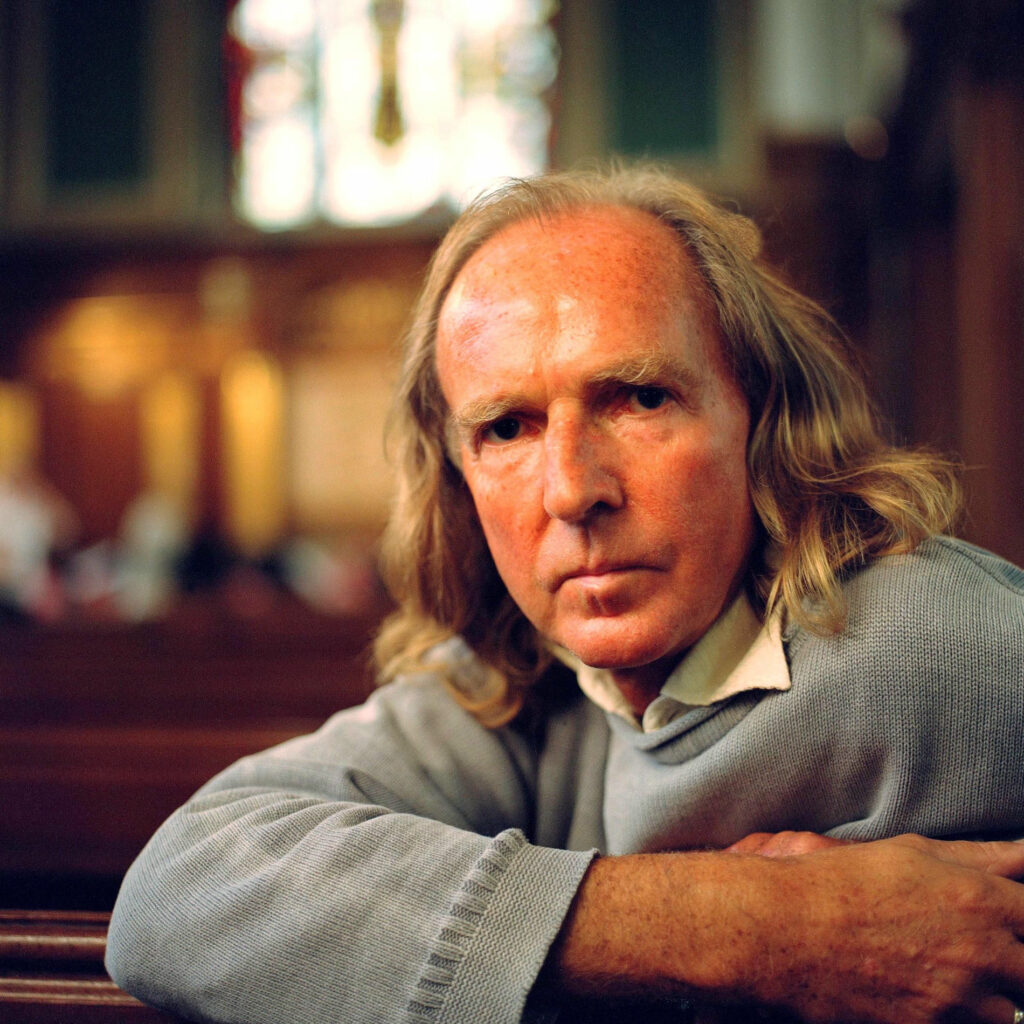
John Tavener
John Tavener (1944–2013) was a British composer renowned for his sacred and spiritual music, characterized by its mystical intensity, minimalistic textures, and profound engagement with Orthodox Christian liturgical traditions. Tavener’s compositions, spanning choral, orchestral, and chamber music, have been widely performed internationally and have exerted a significant influence on late twentieth- and early twenty-first-century sacred music.
Early Life and Education
John Tavener was born on January 28, 1944, in Wembley, London. He studied at the Royal Academy of Music, where he was mentored by Richard Rodney Bennett, and later at the Royal College of Music under Lennox Berkeley. Early in his career, Tavener explored avant-garde techniques, including serialism and experimental textures, yet he quickly gravitated toward music of a meditative and mystical character, reflecting his deepening interest in spiritual and liturgical traditions.
Musical Style
Tavener’s style is distinguished by:
Sacred focus: Most of his works are rooted in religious texts, particularly Orthodox Christian, but also drawn from Western Christian, Islamic, and Hindu sources.
Minimalism and static harmonies: He employed sustained chords, drones, and repetition to create a sense of timelessness.
Choral prominence: Many works feature unaccompanied choir or small vocal ensembles, often employing plainchant-inspired melodies.
Use of nontraditional tonality: Tavener frequently integrated modes, microtonal intervals, and alternative tuning systems to evoke otherworldly soundscapes.
Spiritual and mystical aims: His compositions were conceived to facilitate contemplation, transcendence, and ritual experience.
Major Works
Choral and Vocal Music
Tavener’s choral output is central to his reputation:
The Protecting Veil (1988), a large-scale work for cello and strings, inspired by the Orthodox Feast of the Protecting Veil of the Mother of God, blending liturgical chant with modern harmonic sensibilities.
Song for Athene (1993), composed for the funeral of Princess Diana, exemplifies his characteristic ethereal textures and has achieved widespread recognition.
Akathist of Thanksgiving (1981), a monumental choral cycle, explores Byzantine hymnody through modal harmonies and sustained vocal lines.
Eternity’s Sunrise (1990), settings of Orthodox prayers for chamber choir and instruments.
Instrumental and Orchestral Music
Although primarily known for vocal music, Tavener composed important instrumental works:
The Whale (1968), an early avant-garde opera incorporating serialist techniques and experimental forms.
Celtic Requiem (1971), blending medieval and modern elements, for children’s voices, adult choir, and orchestra.
The Veil of the Temple (2003–2009), an extensive multi-hour work combining chorus, orchestra, and soloists, reflecting Tavener’s lifelong interest in ritualized musical forms.
Religious and Cultural Context
Tavener converted to the Russian Orthodox Church in 1977, profoundly shaping his musical output. Orthodox theology, iconography, and chant practice influenced his use of modality, timbre, and spatialized sound. His compositions often aim to evoke mystical experiences and meditative states, emphasizing music’s spiritual rather than purely aesthetic function. Tavener’s works have been performed in both concert and liturgical contexts, reflecting his belief in music as a medium of devotion.
Reception and Influence
Tavener achieved both critical acclaim and popular recognition. While some early critics viewed his mystical minimalism as unconventional within contemporary classical discourse, his music has enjoyed broad appeal across religious and secular audiences. His influence is evident in the work of composers engaged with sacred minimalism, meditation-focused music, and the fusion of Western and Eastern liturgical traditions.
Legacy
John Tavener passed away on November 12, 2013, in London. His body of work, distinguished by spiritual depth, clarity, and mystical intensity, continues to resonate with performers and audiences worldwide. Tavener’s integration of Orthodox chant, minimalism, and transcendent aesthetic principles has established him as one of the most significant British composers of sacred music in the twentieth century, leaving a lasting impact on the development of contemporary spiritual composition.