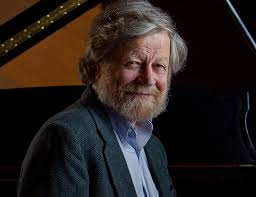
Morten Lauridsen
Morten Lauridsen (born 1943) is an American composer widely acclaimed for his choral music, characterized by lyrical beauty, harmonic richness, and contemplative expressiveness. His compositions have become staples of the modern choral repertoire, blending elements of tonality, modality, and contemporary harmonic language to create works that are both accessible and artistically sophisticated. Lauridsen’s music has been performed internationally and has earned him recognition as one of the most significant American choral composers of the late twentieth and early twenty-first centuries.
Early Life and Education
Morten Lauridsen was born on February 27, 1943, in Colfax, Washington, United States. He displayed early musical talent, studying piano and composition as a youth. Lauridsen pursued formal training at the University of Southern California (USC) Thornton School of Music, where he earned both a Bachelor’s and a Master’s degree in composition. His education provided a strong foundation in traditional Western music theory, composition, and choral writing, while fostering an appreciation for both Renaissance polyphony and contemporary harmonic techniques.
Career
Compositional Work
Lauridsen’s oeuvre spans choral works, vocal solos, and some orchestral music, with a primary focus on a cappella and accompanied choral settings. His music is noted for its:
Lyrical and flowing melodic lines, often drawing on poetry and sacred texts.
Rich harmonic textures, blending tonal, modal, and extended harmonies.
Expressive and contemplative character, creating a meditative, transcendent musical experience.
Clarity and accessibility, balancing technical sophistication with immediate emotional appeal.
Choral Works
Lauridsen’s choral music has achieved broad international recognition. Some of his most notable works include:
O Magnum Mysterium (1994): A setting of the traditional Latin Christmas text, renowned for its luminous harmonies and serene atmosphere.
Lux Aeterna (1997): A large-scale work for choir and chamber ensemble, exploring themes of light and transcendence, often performed in liturgical and concert settings.
Dirait-on (1994): Set to the poetry of Rainer Maria Rilke, demonstrating Lauridsen’s skill in textural and harmonic subtlety.
Madrigali: Six “Fire Songs” (1997): A collection that combines Renaissance-inspired techniques with modern harmonic and rhythmic innovations.
His choral works frequently employ sustained harmonies, overlapping vocal lines, and careful attention to textual clarity, creating an ethereal and contemplative musical effect.
Vocal and Instrumental Works
In addition to choral music, Lauridsen has composed art songs and smaller ensemble works. These pieces reflect similar concerns with melodic lyricism, harmonic color, and expressive depth, often using the human voice as a central expressive vehicle.
Pedagogy and Influence
Lauridsen has served as a faculty member at the University of Southern California Thornton School of Music, where he has influenced generations of composers, conductors, and performers. His teaching emphasizes sensitivity to text, attention to harmonic nuance, and the expressive potential of the human voice. Through masterclasses, lectures, and publications, Lauridsen has contributed significantly to choral pedagogy and performance practice.
Musical Style and Aesthetic
Lauridsen’s style is characterized by:
Integration of tonal, modal, and extended harmonic language, creating a sense of timeless beauty.
Expressive melodic lines, often inspired by poetry and sacred texts.
Text-driven composition, ensuring that musical phrasing enhances the meaning and rhythm of the text.
Meditative and spiritual qualities, with music often evoking introspection, serenity, and transcendence.
His aesthetic emphasizes emotional resonance and clarity of expression, making his works both challenging for performers and deeply moving for audiences.
Influence and Legacy
Morten Lauridsen is regarded as one of the most influential American choral composers of his generation. His works have been performed by choirs worldwide, recorded extensively, and cited for their artistic and spiritual impact. Lauridsen’s combination of lyrical expressiveness, harmonic sophistication, and textual sensitivity has set a standard for contemporary choral music, inspiring composers, conductors, and singers internationally.
Through his compositions, teaching, and advocacy for choral artistry, Lauridsen has left a lasting legacy, shaping the sound and practice of modern choral music while demonstrating the enduring power of lyricism, harmony, and human voice in contemporary composition.